Back to Team Up
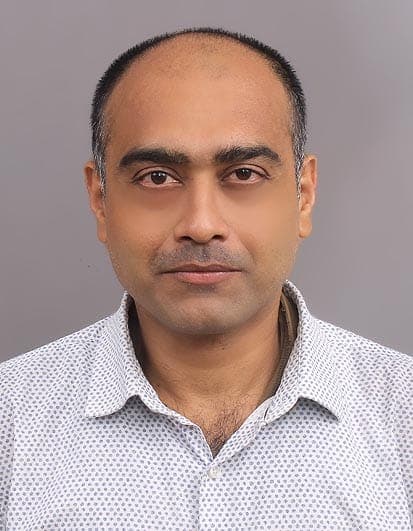
Soumya Kanti Ganguly

Team Up Portfolio

Soumya Kanti Ganguly, PhD

Senior High-Performance Computing Software Engineer & Data Scientist

PhD, IIScBangalore

Soumya is a PhD-trained computational scientist with deep experience in theoretical physics, high-performance computing, machine learning, probabilistic modeling, quantum systems, and data-driven engineering. His work spans AMD EPYC recommendation systems, cloud cost advisory workflows, autonomous workload orchestration concepts, churn prediction, quantum random-number prototypes, and physics-based optimization methods.

16+

years across research and industry

PhD

Theoretical condensed matter physics

10+

research publications and proceedings

Core Skills

High-Performance ComputingCUDA / OpenMPPython / CMachine LearningAgentic AI & RLQuantum Computing

Portfolio Case Studies

Selected Work

Project-level view of the problem, contribution, working model, and business or research outcome.

Technical architecture showing benchmark telemetry feeding compute recommendations
Performance-cost fitnetwork

Step 1

Benchmarks

Step 2

Telemetry

Step 3

Rules

Step 4

EPYC recommendation

Case 01High-performance computing

HPC Recommendation and Cost Advisory

Applied profiling data, benchmark metrics, distance algorithms, and rule-based methods to improve high-performance computing and cloud cost decisions.

Challenge

Engineering and infrastructure teams needed practical ways to match workloads with processor choices and cloud configurations.

Outcome

Produced a decision-support layer for EPYC-AMD recommendations and cost-optimized infrastructure planning.

How the work was done

1

Used SPEC scores, benchmark telemetry, and profiling signals to compare workload behavior.

2

Combined distance-based matching with rules that reflect processor generation, cost, and performance constraints.

3

Structured benchmark records for cleaner search, validation, and future AI-assisted discovery.

Autonomous workload orchestration loop with telemetry and adaptive scheduling
Self-optimizing looporchestration

Step 1

Telemetry

Step 2

RAG context

Step 3

Agent policy

Step 4

Adaptive scheduler

Case 02Agentic AI and reinforcement learning

Autonomous Workload Orchestration

Designed a concept framework combining historical workload patterns, real-time telemetry, RAG, Agentic AI, and RL for adaptive scheduling and resource management.

Challenge

Modern compute environments need to react to changing workload patterns, anomalies, and resource pressure without constant manual intervention.

Outcome

Defined a prototype architecture for intelligent resource management, anomaly detection, and adaptive infrastructure decisions.

How the work was done

1

Connected historical workload patterns with live telemetry to create operational context.

2

Used retrieval-augmented reasoning to explain system state and recommend actions.

3

Explored reinforcement learning loops for adaptive scheduling and self-optimizing resource allocation.

Abstract quantum systems diagram with particles and connected modules
Theory to prototypequantum

Step 1

Photon noise

Step 2

Randomness tests

Step 3

Quantum search

Step 4

Classifier

Case 03Quantum computing research

Quantum Systems and Algorithms

Researched smartphone-based quantum random number generation, quantum radar concepts, and quantum algorithm mappings for classification problems.

Challenge

Quantum concepts often need careful translation from theory into feasible software experiments and proof-of-concept systems.

Outcome

Built bridges between quantum theory, algorithm design, and practical prototype directions.

How the work was done

1

Explored smartphone image noise as a source for quantum random number generation prototypes.

2

Studied entanglement-based sensing and quantum radar concepts at the theoretical level.

3

Mapped classification problems into search formulations that can align with quantum algorithms.

Physics-based optimization visual with energy landscape and compute blocks
Physics-led algorithmsoptimizer

Step 1

Physical model

Step 2

Cost function

Step 3

GPU methods

Step 4

Optimized solution

Case 04Applied physics and numerical methods

Physics-Based Optimization

Explored physical optimizer models and GPU-oriented numerical methods for solving optimization and differential equation problems.

Challenge

Optimization problems and numerical simulations require methods that are both mathematically grounded and computationally efficient.

Outcome

Connected theoretical physics intuition with algorithm design for optimization and high-performance numerical computing.

How the work was done

1

Studied physical systems where energy or free energy can act as an optimization cost function.

2

Used MAX-CUT and simulated bifurcation style problems as test cases for optimization behavior.

3

Explored finite-difference methods and GPU-oriented approaches for generalized PDE solving.

Recent Experience

Senior HPC Software Engineer

Infobell IT

2025 - Present

Senior Data Scientist

ONGIL Private Limited

2020 - 2025

Senior Research Consultant, Quantum Systems

Archeron Group

2020

Research Intern, Digitalization & Automation

Siemens CT

2019 - 2020

Portfolio Highlights

  • Built recommendation engines for AMD EPYC processors using SPEC scores and performance metrics.
  • Designed cloud cost advisor systems for generation-based, cost-optimized infrastructure recommendations.
  • Prototyped autonomous workload orchestration with telemetry analytics, RAG, Agentic AI, and reinforcement learning.
  • Developed ML and probabilistic models for churn prediction, product ranking, financial scenarios, and consumer behavior.

Credentials

  • PhD, Theoretical Condensed Matter Physics, Indian Institute of Science
  • M.Sc Physics, University of Madras
  • CSIR Junior Research Fellowship
  • Research publications in statistical physics, condensed matter, and applied mechanics